Felt, straw, and leather are not three versions of the same hat. They are three different products with different seasons, price ceilings, and ways of taking a logo. If you are ordering cowboy hats to brand for a rodeo sponsorship, a country music festival, a wedding party, or a western retail line, the material decision drives almost everything downstream: what it costs, how it wears, and which decoration methods are even possible. This guide walks through what separates the three, what the confusing X ratings on felt actually mean, and how each material takes branding.
The three materials and what each is for
Felt is the cool-weather hat. Made from pressed animal fiber, felt holds a crisp shape, sheds light rain, and reads as the dressier, more traditional option. It is what most people picture as a “real” cowboy hat, and it spans an enormous quality and price range depending on the fiber blend. Straw is the warm-weather counterpart: woven rather than pressed, breathable, lighter, and priced lower at the entry level, which makes it the workhorse for summer events and outdoor giveaways. Leather sits apart from both. A leather cowboy hat is soft, casual, and rugged rather than formal, and it appeals to buyers who want a distinctive look that shrugs off handling, though it does not hold a sharp crease the way felt does.
Season is the first filter. A felt hat handed out at an August festival will bake the wearer; a straw hat at a December event looks out of place. If your run has to work year round, that usually points to ordering both a felt and a straw option rather than forcing one material to cover every date.
Decoding the X: what felt grades actually mean
The single most misunderstood number in western hats is the X rating stamped inside the sweatband. Historically it was a real measurement: a 10X hat once meant essentially pure beaver felt, prized because beaver fiber has microscopic hooked barbs that interlock into a dense, water-shedding, shape-holding material. Since the 1970s, though, the X scale has inflated and drifted. Makers quietly reduced beaver content while keeping or raising the X number, and because no governing body standardizes the scale, every brand now speaks its own dialect. A modern 50X from one maker can carry roughly 40 to 55 percent beaver, a 100X often lands in the mid-80s to mid-90s, and only the top of a brand’s line reaches genuinely pure beaver or beaver blended with exotic fur.
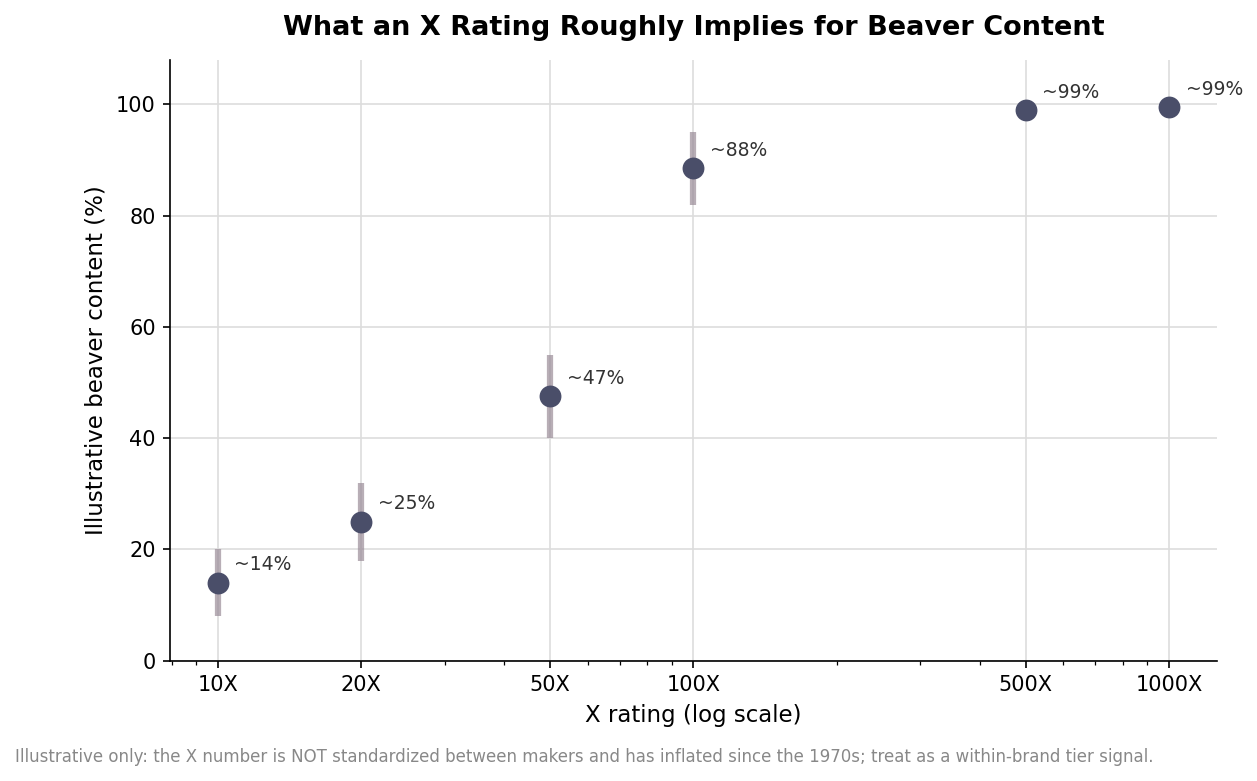
The practical takeaway is to read the X as a within-brand tier signal, not a cross-brand spec. A 20X in one company’s catalog and a 20X in another’s are not guaranteed to be the same felt. Wool felt, the entry point, is a different animal entirely: it is porous, less water resistant, and usually sold either unrated or at a low X, and it is the right call for a high-volume promotional order where the hat is a keepsake rather than a decade-long daily wear. When comparing quotes, ask the supplier for the actual fiber content, because that number tells you far more than the X on the band.
Straw grades and why the weave matters
Straw has its own quality ladder, and it is easier to read than felt because you can see and feel it. Tighter, finer weaves take more labor and cost more, and they hold their shape better in heat and humidity. Premium straws such as Shantung and genuine palm sit well above basic paper or toyo straw in both durability and price, with the finest hats woven from very high grass counts. For a branded order, the decision is usually between a low-cost open-weave straw that photographs well and survives a single event, and a tighter premium weave that a recipient will actually keep and wear. The former maximizes reach per dollar; the latter maximizes goodwill and lifespan. Neither is wrong, but they serve different campaign goals.
What it costs, by material and grade
Price tracks material and grade more than anything else, and the spread is dramatic. A basic straw or wool-felt hat suitable for a giveaway can land in the low tens of dollars per unit, while a premium fur-felt in the 100X range and up climbs into the hundreds. Leather generally slots in the mid-range, above basic straw and wool felt but below serious fur-felt. The chart below shows indicative bands; treat them as directional market ranges rather than quotes, because grade, quantity, and decoration each move the number.
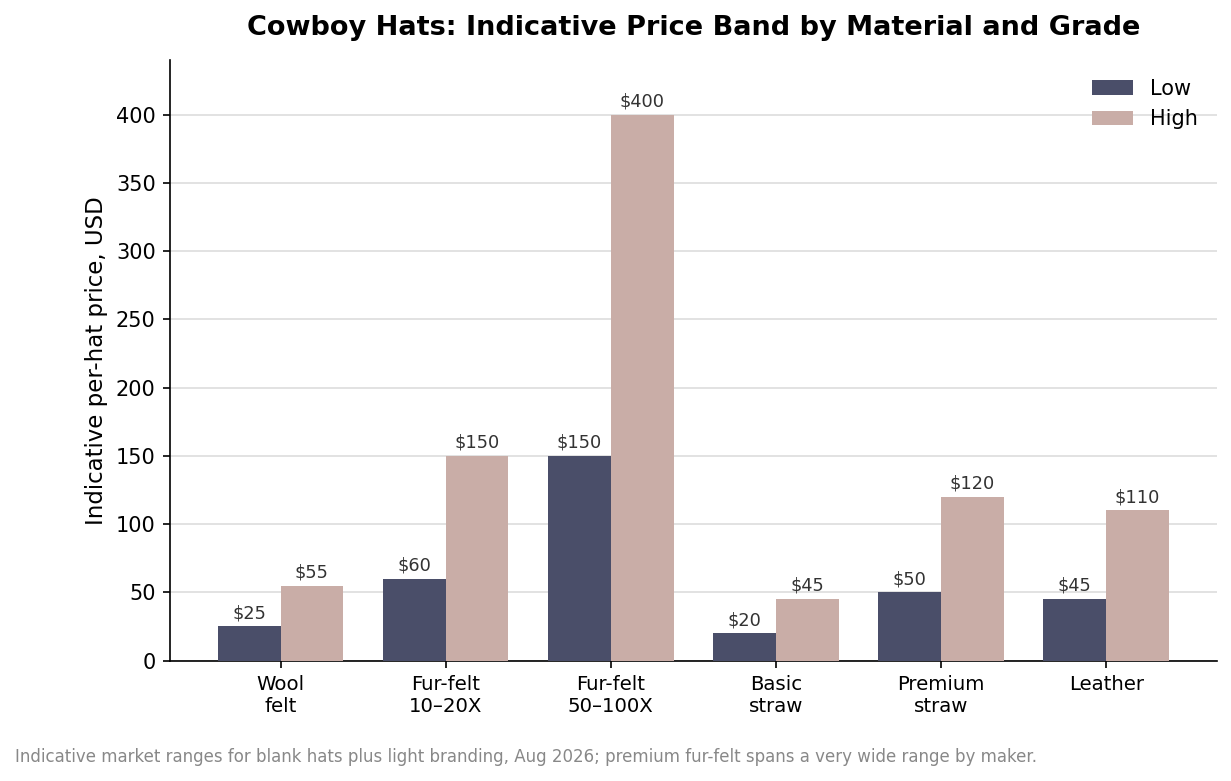
The reason the premium fur-felt bar is so wide is the same X-rating fuzziness described above: two hats both labeled high-X can differ in real fiber content and therefore in real cost. For budgeting a branded run, decide the tier first based on how the hat will be used, then compare fiber content within that tier, and only then weigh quantity discounts.
Branding a cowboy hat: methods that suit the material
Cowboy hats do not take a logo the way a baseball cap does, because you cannot simply run a curved felt or straw crown through a flat embroidery machine. The most common branding routes are a leather patch, a custom hat band, and applied hardware. A laser-engraved or debossed leather patch attaches to the front of the crown and works across felt, straw, and leather alike, giving a clean logo surface without fighting the hat’s texture. A printed, woven, or tooled hat band wraps the crown and carries a repeating logo or team colors, and it is often the most cost-effective option at volume because it decorates without touching the hat body. Applied pieces such as conchos, pins, and feathers add a premium, collectible feel for higher-end gifts.
Two material-specific cautions matter. Felt can be heat-branded for a subtle tonal mark, but aggressive heat scorches, so it belongs in experienced hands. Straw’s open weave will not hold fine embroidery or small print, which is why patches and bands dominate there. Whatever the method, send layered vector artwork and confirm the patch or band size against the crown before committing a bulk run, since a logo sized for a cap will look lost on a ten-gallon crown. Match the decoration to the material and the hat carries your brand without ever looking like an afterthought.
Leave a Reply