When a brand orders cowboy hats for a rodeo sponsorship, a country music activation or a Western-themed event, the conversation usually starts with felt versus straw and stops there. But the choice that most changes how the hat looks in a photo is the crown shape, the pattern of creases pressed into the top of the hat. A cattleman and a gus built from the exact same felt read as completely different hats. If you are ordering in bulk and putting a logo on the front, it pays to understand the shapes before you sign off on a sample.
This is a plain-language guide to the common cowboy hat crown shapes and creases, what each one signals, and how to pick one for a branded order.
Cattleman: the safe default
The cattleman is the shape most people picture when they think cowboy hat. It has three creases in the crown, one running down the center and one on each side, which pinches the crown into a tall, relatively narrow profile. The brim carries a gentle curl on both sides. It is the most traditional and the most widely flattering shape, which makes it the default choice for a mixed audience where you cannot predict who will end up wearing the hat.
For a branded order, the cattleman has a practical advantage beyond its looks: the flat, upright front panel of the crown gives a clean, predictable surface for a logo, patch or band, and it photographs well from the front. If you want one shape that offends no one and shows a mark clearly, this is it.
Tall crowns: gus and open crown
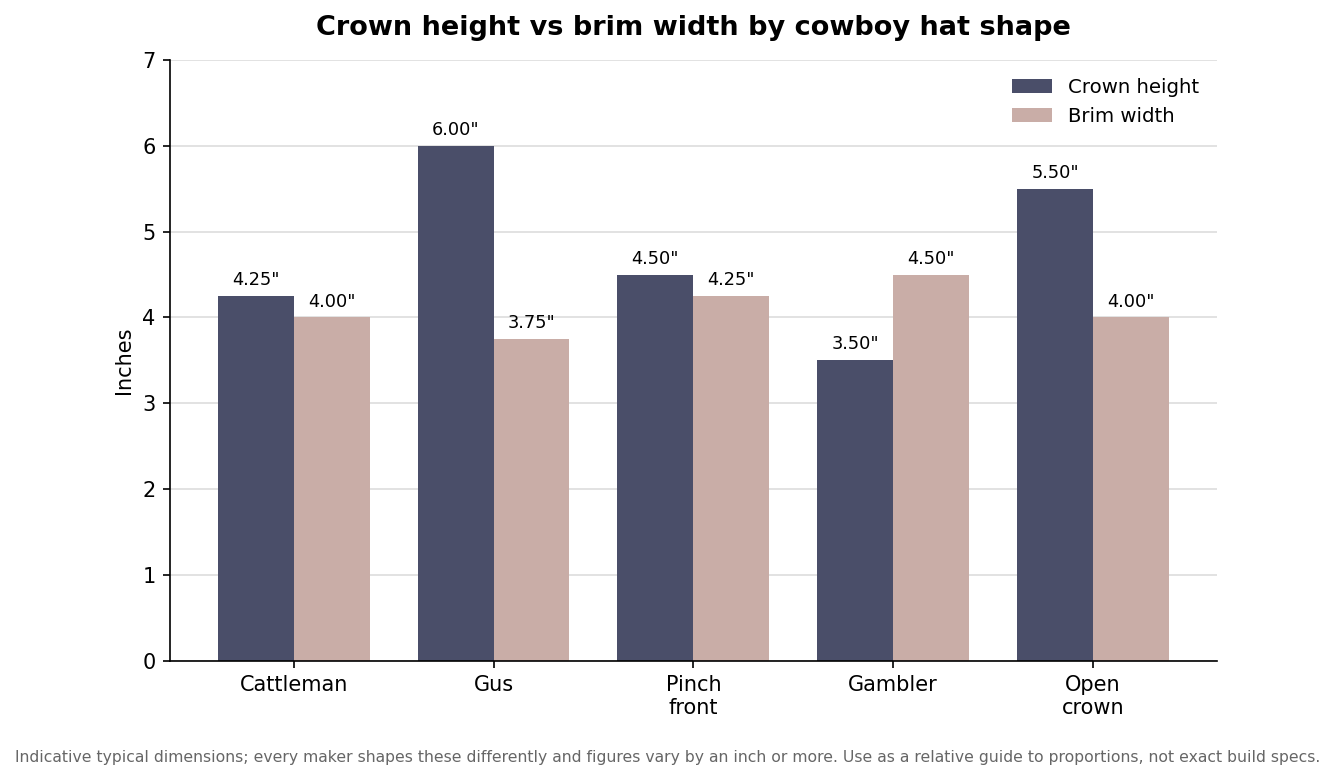
The gus is the tall, rugged shape you see in Western films. It uses three creases like a cattleman, but the crown slopes down toward the front, giving it an angled, working-ranch silhouette, and the crown itself runs tall, often around six inches. It reads as authentic and a little rough, which suits outdoor brands, ranch and rodeo tie-ins, and anyone who wants the hat to look lived-in rather than dressed-up.
An open crown is a hat with no crease at all: a smooth, rounded dome. It is the blank canvas of the hat world. Some buyers order open crown deliberately so the wearer or a local hatter can shape it themselves, and it is a smart choice when you want to ship one product and let people personalize the crease later. The trade-off is that an unshaped hat looks unfinished to some eyes, so it works best when personalization is part of the story.
Pinch front, gambler and the rest
The pinch front, sometimes called a teardrop, has a crown pinched to a soft point at the front and a wider, often slightly curled brim. It skews more modern and fashion-forward, is especially common in straw, and is frequently the shape people reach for when they want a lighter, more contemporary look. The gambler goes the other direction, with a low, nearly flat crown and a broad flat brim; the shorter crown makes it a comfortable hot-weather choice for outdoor summer events.
Beyond these you will hear names like brick, which is a squared-off cousin of the cattleman with sharper, more rectangular creases for a formal look, and the very tall Tom Mix or ten-gallon shapes that are more costume than everyday wear. For most branded orders the decision realistically comes down to cattleman, gus, pinch front or open crown, with gambler in the mix for hot outdoor settings.
Brim shape is a second decision
Crown shape gets the attention, but the brim is a separate choice that changes the whole feel of the hat. Western brims commonly run in the range of about three and a half to four and a half inches, and they can be left flat, curled up tightly on the sides, or shaped with a dramatic front-to-back roll. A tighter curl reads dressier and more modern; a flatter brim reads more traditional and workmanlike. Because brim styling is often done by steaming and shaping after the hat is made, it is worth confirming with your supplier whether the brim comes pre-shaped or flat, and whether the shape you want is included or costs extra.
Keep the branding in mind here too. A tightly curled brim can partially shadow a logo positioned high on the crown in photos, while a flatter brim keeps the front panel open to the camera. If the whole point of the order is visibility, the brim and the logo placement need to be decided together.
Choosing a shape and size mix for a branded order
For a general audience, the cattleman is the shape that satisfies the most people, with an open crown as the flexible alternative when you want wearers to finish the hat themselves. Match the material to the season, straw and lighter shapes for summer, felt for cooler months, and settle the brim styling and logo placement in the same conversation so the mark actually shows.
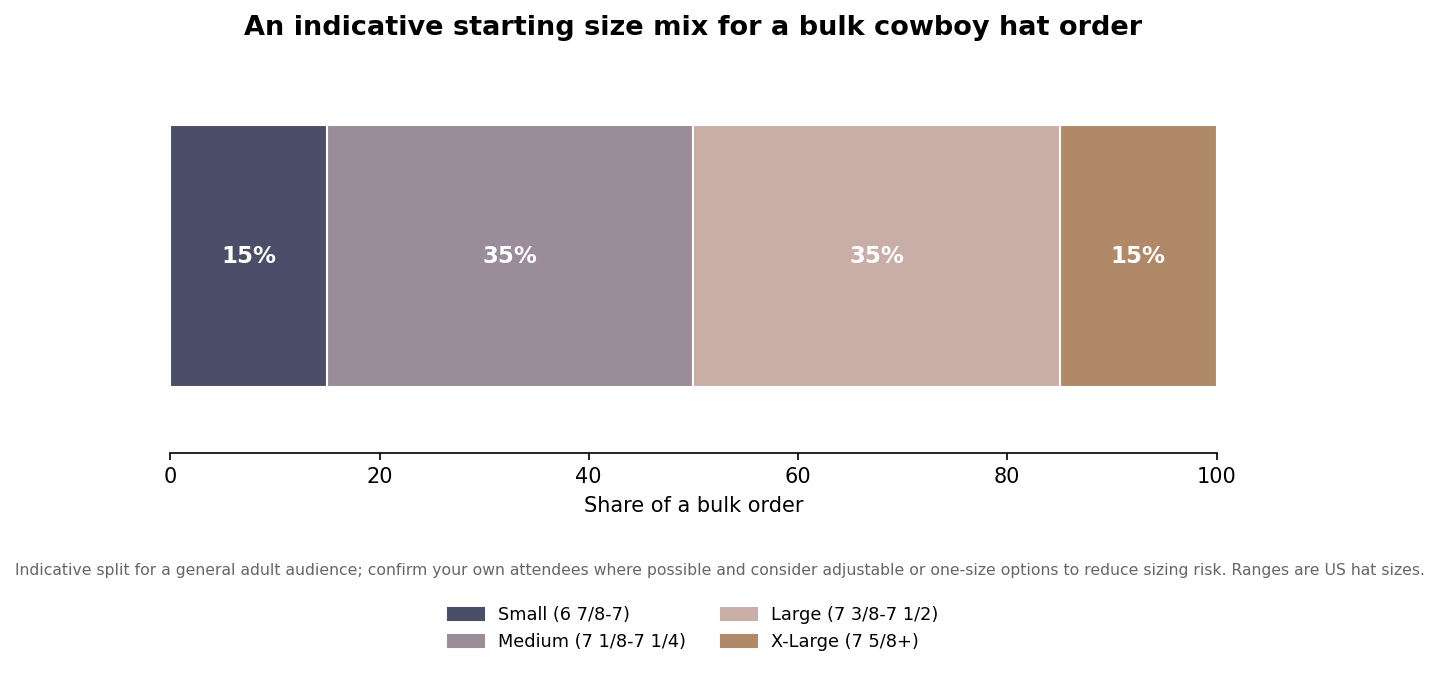
Sizing is the other half of a bulk order, and it is where money gets wasted. Hats are not as forgiving as one-size caps, so you need a spread of sizes rather than a single default. The chart below shows an indicative starting split across small, medium, large and extra-large; it is a general-audience estimate, not a rule, so confirm your actual attendees where you can. Where sizing is genuinely unpredictable, adjustable interior bands or one-size options reduce the risk of ending up with a box of hats nobody can wear.
The through-line is simple: pick the crease for the look you want, pick the brim and logo placement together so the branding reads, and order a realistic spread of sizes. Approve a physical sample in the exact shape, material and brim before the full run, because a crown shape that looks right in a reference photo can sit very differently once it is on a head. Get those decisions right and a branded cowboy hat becomes something people actually keep and wear, which is the only version of promotional headwear that pays for itself.
Leave a Reply